Junk Shop Frequency: The Bedroom Producers Turning Broken Keyboards into Cult Sounds
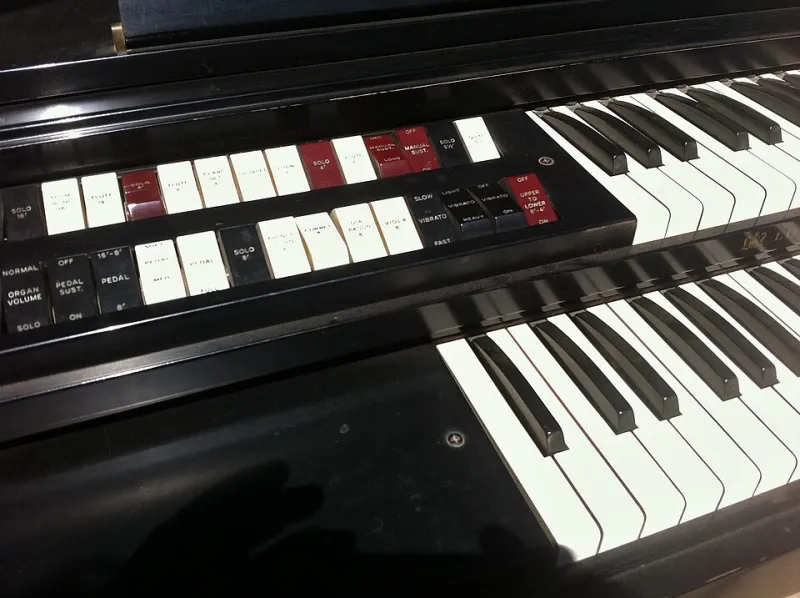
Photo: Unknown authorUnknown author, CC0, via Wikimedia Commons
The keyboard cost four dollars. It's a Casio — one of the cheap consumer models from the early '90s, the kind marketed to parents who wanted their kids to "learn music" and mostly sat in closets until it ended up at a Goodwill in Albuquerque. One of the keys sticks. The pitch bend wheel doesn't return to center. The battery compartment is held shut with a piece of electrical tape.
In the hands of a producer who goes by Sullen Watt, it sounds like nothing you've heard before.
"I could afford better gear," Sullen Watt says, speaking from a bedroom studio that looks like the aftermath of a very specific kind of obsession — shelves lined with battered Casios, broken drum machines, circuit-bent toys, and a tangle of patch cables that would give a professional studio engineer a headache. "That's not really the point. The point is that this thing has opinions. It fights back. And what comes out of that fight is interesting."
The Thrift Store Circuit
Sullen Watt is one node in a loosely connected network of experimental bedroom producers who've built their entire creative practice around cheap, obsolete, and frequently malfunctioning electronic instruments. The gear pipeline runs through Goodwill stores, Facebook Marketplace listings, estate sales, and the occasional dumpster — anywhere that keyboards, drum machines, and vintage electronic toys get discarded by people who don't know what they're holding.
The prices are absurdly low by any professional music production standard. A Casio MT-series keyboard that retails in thrift stores for under ten dollars can, with the right knowledge and some creative abuse, produce sounds that no amount of expensive software accurately replicates. Vintage Yamaha Portasounds — another common thrift find — have a particular lo-fi warmth that producers in this community have turned into a signature texture. Circuit bending, the practice of deliberately rewiring cheap electronics to produce unintended sounds, has a long history in experimental music, but what's happening now feels like a new iteration: less focused on pure noise and more interested in building actual songs from genuinely weird materials.
The community shares knowledge through Discord servers, YouTube channels, and Reddit threads — tutorials on which models are worth hunting, how to stabilize aging circuits, which modifications produce the most interesting results. It's the kind of distributed expertise that only exists because the internet made it possible to find the other three people in the country who care about the exact same obscure piece of gear.
Limitation as Creative Engine
There's a long tradition of artists making interesting work with constrained resources — punk, lo-fi indie rock, early hip-hop production all carry versions of this story. But what's happening in this specific corner of the experimental music world has its own particular flavor, one that's less about making do and more about deliberately choosing limitation as a creative stance.
Producers in this scene talk about their cheap gear the way some musicians talk about vintage instruments: not as a compromise but as a collaborator with its own character. A keyboard that can only produce twelve preset sounds forces a different kind of creativity than a software synthesizer with infinite options. A drum machine with a broken step sequencer creates rhythmic patterns that no human would program intentionally. The limitations don't just constrain the music — they generate it.
"Every piece of gear I have breaks in a specific way," says Mira Holst, a Chicago-based producer whose releases have accumulated a devoted following on Bandcamp. "And that specific way it breaks becomes part of my sound. I'm not fighting against it. I'm working with it."
Holst's tracks blend elements of ambient music, industrial textures, and something close to lo-fi pop — but none of those labels quite fit. The genre-defying quality isn't accidental. When your instruments don't behave the way instruments are supposed to, the music doesn't sound the way music is supposed to either.
The Cult Following Problem (and Why It's Not Actually a Problem)
None of the producers in this scene are famous by any conventional measure. Bandcamp follower counts in the low thousands, occasional features on experimental music blogs, word-of-mouth recommendations in online communities dedicated to outsider and DIY music. By the metrics that mainstream music industry gatekeepers use to evaluate success, this is a rounding error.
But the audiences that do find this music tend to be intensely engaged in a way that streaming numbers don't capture. Listeners who find Sullen Watt or Mira Holst through the right Discord server or Bandcamp rabbit hole often become long-term followers, buying physical releases — cassette tapes, which feel thematically appropriate — and showing up for the occasional live performances that these producers organize in unconventional spaces.
"My audience is small and they're all deeply weird in the best way," Holst says. "I wouldn't trade that for a million passive Spotify streams. Those people are actually listening."
There's something specific about the way this music circulates that seems to select for a particular kind of listener. It doesn't appear on algorithmic playlists. It doesn't get mainstream press. Finding it requires either knowing where to look or stumbling into the right community — and that friction filters out casual engagement in favor of genuine connection.
Sound That Doesn't Know What Year It Is
One of the most striking things about the music coming out of this scene is how temporally disorienting it can be. The cheap synthesizers and keyboards these producers use are mostly from the '80s and early '90s, but the music doesn't sound retro in the way that intentional nostalgia projects do. It sounds genuinely unmoored from any particular era — simultaneously ancient and futuristic, familiar and completely alien.
That quality is partly a function of the gear itself. Cheap consumer keyboards from that era were trying to approximate sounds that were already stylized and synthetic — they were imitations of imitations. Running those sounds through contemporary production techniques and unconventional arrangements produces something that doesn't have a clear reference point.
It also reflects a broader ethos in this community around rejecting genre legibility as a goal. The producers who are doing the most interesting work here aren't trying to make something that sounds like anything in particular. They're chasing sounds that feel true to whatever strange logic their gear is operating on.
Four dollars at a Goodwill in Albuquerque. Electrical tape on the battery compartment. A pitch bend wheel that doesn't return to center. And coming out the other end: something that sounds like nothing else. That's the whole deal.