Nowhere Feels Like Somewhere: How Empty Spaces Became America's Weirdest Obsession
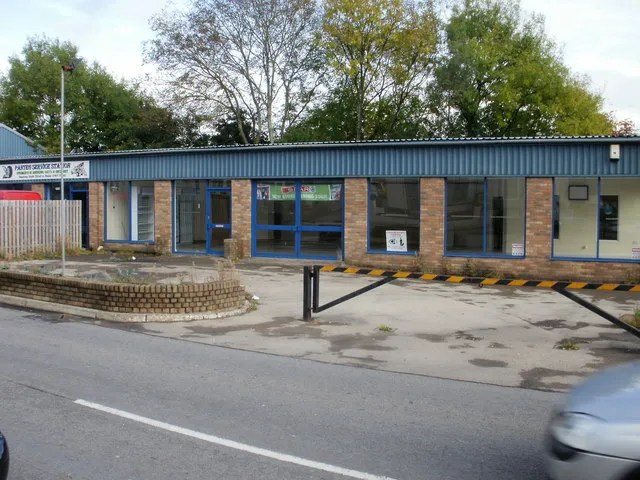
Photo: John Grayson, CC BY-SA 2.0, via Wikimedia Commons
There's a specific kind of dread that comes from walking through a mall after closing time. The stores are dark, the fountains are off, and the whole place hums with a silence it was never designed to hold. It feels wrong in a way you can't quite name. And yet — you'd probably scroll through a Reddit thread full of photos like that for a solid forty-five minutes without blinking.
Welcome to the liminal space rabbit hole. Population: everyone who grew up staring at drop ceilings.
What Even Is a Liminal Space?
The term "liminal" comes from the Latin limen, meaning threshold. Anthropologists used it to describe transitional states — the in-between moments of rituals, rites of passage, the strange stretch of time when you're neither here nor there. Somewhere along the way, the internet took that concept and applied it to architecture, and the results have been genuinely haunting.
A liminal space, in the aesthetic sense, is a place that exists between purposes. Airport terminals at 3 a.m. Suburban swimming pools drained for winter. The back hallway of a Chuck E. Cheese that nobody was ever really supposed to see. These are spaces designed for transit or function, caught at a moment when they're stripped of both. No people, no noise, just the residue of intention.
The aesthetic really started gaining traction around 2019, when a now-legendary 4chan post described "The Backrooms" — the idea that if you "noclipped" out of reality, you'd find yourself in an infinite expanse of yellow-beige office carpet and buzzing fluorescent lights. The post went viral because it tapped into something primal: most of us have had a dream that felt exactly like that.
From Internet Folklore to Everywhere
What started as creepypasta lore didn't stay contained for long. The Backrooms spawned fan-made found-footage films, entire YouTube channels, and an indie game ecosystem that's still growing. Kane Pixels, a teenage filmmaker, turned the concept into a deeply unsettling short film series that racked up tens of millions of views. The production quality was raw, the atmosphere was suffocating, and people ate it up.
Beyond the Backrooms specifically, the broader liminal aesthetic started seeping into music videos, album art, and visual storytelling. Artists like Bladee and various vaporwave producers had been flirting with these visuals for years — empty malls, late-night convenience stores, the particular color temperature of a fluorescent bulb at 2 a.m. But now it wasn't just a subcultural signal. It was everywhere.
Indie game developers leaned in hard. Titles like Anemoiapolis, Pools, and The Forgotten City built entire experiences around the emotional texture of these spaces. The gameplay loop is often minimal by design — you wander, you observe, you feel something you can't quite articulate. That's the point.
Why Does It Hit So Hard?
Here's where it gets interesting — and a little uncomfortable to sit with.
Gen Z and millennials didn't just stumble onto this aesthetic by accident. These are generations that grew up watching American infrastructure slowly hollow out. The malls that defined suburban childhood in the '90s have been dying for decades. The corporate campuses, the chain restaurants, the big-box retail experiences — they're either abandoned, repurposed, or running on fumes. When you photograph an empty Sears and post it online, you're not just sharing a spooky picture. You're documenting a kind of cultural grief.
There's also the nostalgia angle, which is complicated. Liminal spaces often evoke a very specific flavor of childhood memory — the kind that doesn't belong to any particular moment but feels deeply familiar. Psychologists sometimes call this "anemoia," a nostalgia for a time you never actually lived through. These images feel like memories of places you've never been. That's unsettling. It's also weirdly comforting, in the way that only things that are slightly wrong can be.
And then there's the isolation piece. The pandemic accelerated something that was already in motion — a generational reckoning with loneliness, with the way public spaces can feel both crowded and utterly empty of genuine human connection. A photo of an empty airport terminal hits differently after you've spent two years avoiding airports entirely.
The Art Scene Is Paying Attention
Visual artists have been mining this territory with increasing sophistication. Photographers like Seph Lawless have spent years documenting dead malls and abandoned American retail spaces, and their work has found audiences far beyond the usual fine art circuits. The images circulate on Reddit, on TikTok, in Discord servers — they travel through the same channels as memes and conspiracy theories, which tells you something about how the internet has democratized what counts as "art."
In music, the influence shows up in unexpected places. Hyperpop producers layer these aesthetic vibes into their cover art and visual identities. Lo-fi hip-hop channels built entire brands around the feeling of studying in a space that doesn't quite exist. Even mainstream artists have dipped in — the visual language of liminal spaces shows up in music videos for artists across genres, usually when a director wants to evoke a specific kind of psychological unease without being heavy-handed about it.
The Void Looks Back
What makes the liminal space phenomenon genuinely fascinating, from where we're standing at the fringe, is how it functions as a collective processing mechanism. We've built a whole aesthetic language around the experience of in-between-ness because so many of us feel stuck in it — between who we were and who we're becoming, between the culture we inherited and whatever comes next.
Empty spaces feel like they're holding their breath. And right now, honestly? So are a lot of us.
The fluorescent hum isn't going away anytime soon. If anything, as more American infrastructure ages and empties out, the raw material for this aesthetic is only going to multiply. The question isn't whether liminal spaces will keep capturing our imagination. It's whether we'll eventually figure out what they're trying to tell us.
Until then, keep scrolling. The hallway goes on forever.