Dead Air Rebels: The Unlicensed Broadcasters Keeping the Static Alive
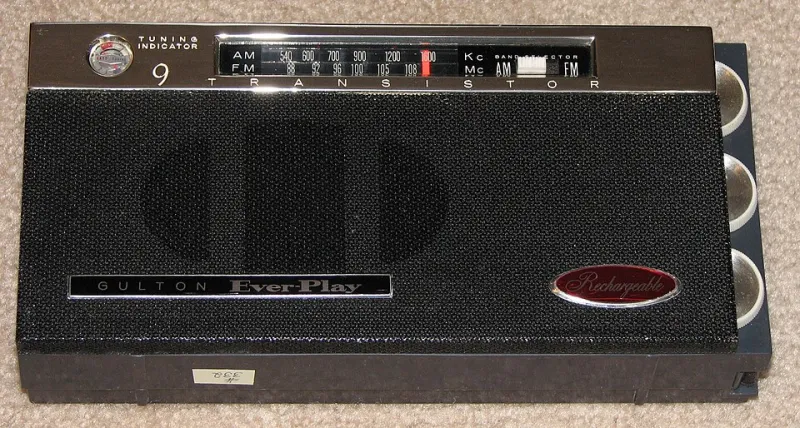
Photo: Joe Haupt from USA, CC BY-SA 2.0, via Wikimedia Commons
There's a frequency in Southeast Houston that nobody's supposed to know about. It lives somewhere around 96.3, and depending on the weather and how the signal bounces off the refinery tanks on the east side, you might catch it from a gas station parking lot or you might not catch it at all. What you'll hear, if you do, is a man who calls himself "Brother Watt" spinning reggae, Louisiana zydeco, and the occasional mid-'90s Memphis rap track — all of it interrupted by his own meandering commentary on neighborhood politics, local restaurant closures, and whatever he read in the paper that morning. There are no ads. There is no jingle. There is absolutely no FCC license.
Brother Watt is part of a tradition that's older than most people realize — and, quietly, it's making a comeback.
The Signal Was Always There
Pirate radio in America has roots that go back decades, tangled up with immigrant communities in New York and Miami who couldn't get airtime on English-language stations, with punk kids in the '80s who thought commercial radio was a cultural wasteland, and with free radio advocates like Stephen Dunifer, whose Berkeley-based Micro Radio project in the '90s became the subject of a landmark legal battle with the FCC. The movement has never fully died. It just goes quiet sometimes.
What's happening now feels different from those earlier waves, though. The current resurgence isn't driven primarily by political ideology or community organizing — though those elements are still present. It's being fed, at least in part, by a genuine exhaustion with the streaming era. When every playlist sounds like it was assembled by the same recommendation engine, when Spotify's algorithm decides that because you liked one Coltrane record you probably want to hear forty more just like it, there's something almost radical about tuning into a frequency where a stranger is just... playing what they feel like playing.
"I got tired of curating," says a woman in Chicago who runs a low-wattage station out of her Pilsen apartment on weekend evenings. She asked to be identified only as "Marta" and wouldn't specify her frequency. "Streaming made music into this thing you manage. I wanted it to feel like something was happening again."
Soldering in the Margins
The technical barrier to entry for pirate broadcasting has never been lower, and that's a big part of why the scene is growing. A basic FM transmitter that can reach a few city blocks costs less than a nice dinner. More serious operators — the ones broadcasting across a mile radius or more — build their own rigs, often from schematics shared in Discord servers and old forum threads that have been archived and re-archived across the internet for twenty years.
The engineering culture around this stuff is genuinely impressive. People are modifying surplus military transmitters, repurposing broadcast equipment from shuttered AM stations, and designing antenna arrays that can be hidden on rooftops or inside attic spaces. There's a whole aesthetic to it — the smell of solder, the glow of analog meters, the satisfying click of a broadcast board going live — that streaming simply cannot replicate.
In Detroit, a collective called Rust Signal has been operating intermittently for the better part of three years, broadcasting local music, oral history recordings, and a weekly call-in show that's become something of a neighborhood institution in their corner of the city. They use a transmitter they built themselves from salvaged parts, housed in a case they painted to look like a vintage suitcase. The whole setup can be broken down and moved in about twenty minutes.
That mobility matters.
Cat, Mouse, and Radio Waves
The FCC doesn't love pirate radio operators, to put it gently. The agency has enforcement authority to issue fines — sometimes reaching into the tens of thousands of dollars — and to seize equipment. In major markets like New York and Miami, where unlicensed Caribbean and Latin American stations have long been part of the broadcast landscape, enforcement sweeps happen with some regularity. The agency maintains a tip line and responds to complaints from licensed broadcasters who argue, not unreasonably, that pirates create interference.
But enforcement is patchy, and the FCC's resources are finite. Low-wattage operators in smaller cities often go years without any official attention. The cat-and-mouse dynamic is real, but the cat is frequently distracted.
Operators who've been doing this for a while have developed what you might call a discipline of invisibility. They avoid patterns. They don't announce their locations publicly. They cultivate listeners through word of mouth rather than social media. Some use directional antennas to minimize their broadcast footprint while maximizing signal quality in a specific geographic area. It's a whole skill set built around not being found.
"The FCC is looking for people who are causing interference or who are broadcasting on frequencies that matter to someone with money," explains one long-running operator in the Pacific Northwest who's been at it since the early 2000s. "If you're careful about where you sit on the dial and you're not stepping on anything, you can fly under the radar for a long time."
Hyperlocal as Radical Act
What makes the current moment interesting is how many of these stations are explicitly, almost defiantly, local. Not local in the way that iHeartMedia means when they slap a city name on a nationally programmed station — actually local. Neighborhood local. Block-party local.
Marta's Chicago station plays music from artists within a five-mile radius of her apartment whenever possible. Brother Watt in Houston has interviewed local business owners, covered community meetings, and read poetry submitted by listeners from the surrounding zip codes. The Rust Signal collective in Detroit has built an archive of neighborhood oral histories that they broadcast in chunks between music sets.
This is the thing that streaming genuinely cannot do: it cannot care about your specific block. It cannot know that the corner store closed or that somebody's grandmother just turned 90 or that the local high school jazz band is actually kind of incredible this year. Pirate radio, at its best, is the sound of a place talking to itself.
And right now, a lot of places seem to need that.
Tune In, If You Can Find It
There's no app for this. There's no algorithm that will surface Brother Watt for you. Finding pirate radio in your city requires the kind of effort that the internet has mostly trained us out of — asking around, scanning the dial, stumbling across something unexpected. Some operators maintain anonymous tip channels or vague social media presences that hint at their frequencies without ever stating them outright. Others are genuinely word-of-mouth only.
That friction is, for a lot of listeners, the whole point. Something you have to find feels different from something that was served to you. The static between stations isn't dead air — it's potential. And somewhere in that potential, someone is broadcasting something that nobody approved, nobody monetized, and nobody asked for except the people who needed it.
Spin the dial. See what's out there.