Ghost Foods: The Obsessive Underground Trading Dead Snacks Like Contraband
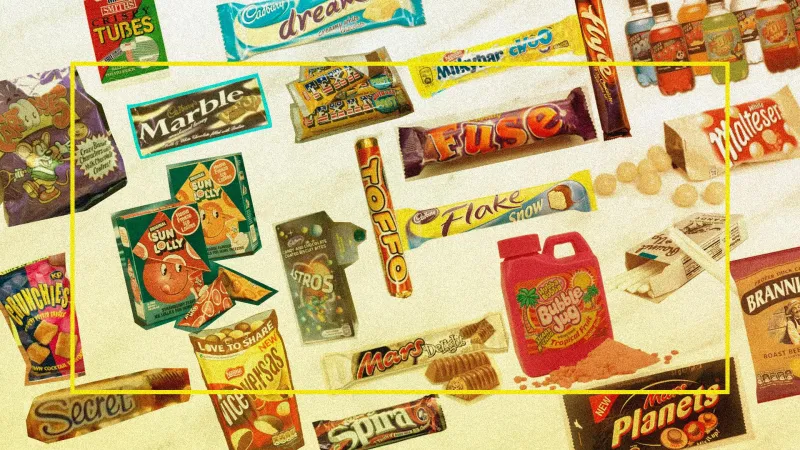
Photo: vintage junk food snack packaging collection retro 90s, via images.bauerhosting.com
There is a sealed, unopened bag of Planters Cheez Balls sitting in a climate-controlled storage unit in suburban Ohio. Its owner, a 24-year-old who goes by @SnackCrypt online, hasn't touched it in two years. He bought it for $47 on a Discord server dedicated to pre-2000s junk food artifacts. He has no plans to eat it. "It's not about the eating anymore," he told me over DM. "It's about the fact that it exists."
Welcome to the ghost food economy — a sprawling, deeply weird subculture where discontinued snacks function less like food and more like relics from a parallel timeline. The people who inhabit this space are obsessive in the best possible way: part archivist, part chemist, part grief counselor for a generation mourning snacks they barely got to taste.
The Snack as Cultural Artifact
Nostalgia has always been a marketable emotion, but something shifted around 2020 when Gen Z — a generation largely too young to have meaningfully experienced Crystal Pepsi or Josta cola — started treating these products not as childhood memories but as mythology. TikTok accelerated everything. A single video of someone cracking open a decade-old can of Surge could rack up two million views overnight, not because the content was spectacular, but because it touched something primal: the desire to access an experience that's been permanently locked away.
Food historians will tell you that product discontinuation is almost always a business decision — flagging sales, supply chain issues, brand repositioning. But for the communities forming around these products, the corporate logic is irrelevant. What matters is the void left behind. And Gen Z, raised on the internet's infinite scroll of everything-all-at-once, finds something almost sacred about scarcity.
"These snacks are frozen in amber," says one moderator of a 12,000-member Facebook group called Discontinued & Delicious. "They can't be ruined by a bad reboot or a controversial tweet. They just exist in your memory as perfect."
The Trading Floor
The actual mechanics of this subculture would raise eyebrows in a business school case study. Dedicated Discord servers operate with the formality of commodity exchanges — verified sellers, reputation scores, dispute resolution processes. A sealed bag of the original Doritos 3D can fetch anywhere from $15 to $60 depending on condition and lot date. Pepsi Blue, discontinued in 2004, trades in six-pack increments for prices that would embarrass most wine collectors.
Regional obscurities command a premium that defies logic. Snacks that were only ever sold in specific states — a particular gas station chain's house-brand chip, a regional dairy's limited-run ice cream sandwich — become almost mythological once discontinued. The rarer the footprint, the higher the ceiling. One collector described tracking down a discontinued Midwestern convenience store brand through a combination of old Yelp reviews, local Facebook groups, and what she called "aggressive grandma outreach" — cold-messaging elderly users who might have old product photos.
None of this is technically illegal, which makes it stranger. These aren't controlled substances. They're Gushers variants and discontinued Mountain Dew flavors. And yet the community operates with the hush-hush energy of something illicit, partly because of the absurdity of taking it seriously, and partly because the stakes feel genuinely high to the people involved.
The DIY Replication Scene
If the trading side of this world is the black market, the replication community is the laboratory. Scattered across Reddit, YouTube, and private Discord channels is a loose network of amateur food scientists attempting to reverse-engineer discontinued products from memory, old ingredient lists, and the occasional vintage commercial.
The process is genuinely rigorous. Replicators source old nutrition labels from packaging collectors (yes, that's a thing). They cross-reference flavor profiles against available food-grade additives. They run blind taste tests with other community members who remember the original product. A dedicated hobbyist spent eight months and roughly $300 in ingredients attempting to recreate the specific citrus-chemical bite of Pepsi Blue, posting progress updates with the methodical detail of a graduate thesis.
The results are almost never perfect — how could they be, when the original formula is proprietary and human taste memory is notoriously unreliable? But that's almost beside the point. "The recipe isn't the goal," explains one prolific replicator who goes by ChemSnack. "The process is the goal. You're doing archaeology with your tongue."
Grief, Scarcity, and the Algorithm
It would be easy to dismiss all of this as performative nostalgia, Gen Z cosplaying a childhood they didn't fully have. But spend enough time in these communities and a more complicated emotional texture emerges. People talk about discontinued snacks the way they talk about deceased relatives — with specific, sensory memory, with the particular ache of something that can't be revisited.
For many younger members, the grief is explicitly secondhand. They're mourning an experience they never had, which is a distinctly internet-native form of loss. You can watch enough vintage commercials and read enough Reddit threads about the original Sprite Remix to feel like you've lost something, even if you were four years old when it was discontinued.
Social media has also introduced a status dimension that complicates the purity of the whole thing. Posting a haul of rare discontinued product is a flex, full stop. The community is aware of this tension — there are ongoing debates about whether the collector side of the scene has corrupted the more innocent preservation-and-memory impulse. Some longtime members have quietly stepped back as the Discord servers got bigger and the prices got wilder.
When Companies Wake Up
Occasionally, the noise gets loud enough that it loops back to the corporations that made the original products. Surge's limited return in 2014 — sold exclusively through Amazon in a move that felt like a fever dream — was directly attributed to a Facebook campaign run by fans. Planters brought back Cheez Balls. Dunkaroos staged a full comeback. Each return is greeted with a complicated mixture of triumph and suspicion: is this the real thing, or a ghost of a ghost?
The consensus in most communities is that corporate revivals rarely satisfy. The formulas are tweaked, the packaging is slightly off, the ingredient sourcing has changed. More importantly, the scarcity is gone — and scarcity, it turns out, was doing a lot of the emotional heavy lifting.
The ghost food underground doesn't want the snacks to come back, not really. It wants to live in the space where they're gone but still imaginable, still tradeable, still worth arguing about at midnight in a Discord server with a hundred other people who understand exactly why this matters.
That's the void at the center of all of it. Not the snack. Never really the snack.