Crate Gospel: The Vinyl Archaeologists Digging Through Estate Sales for Records the Algorithm Will Never Find
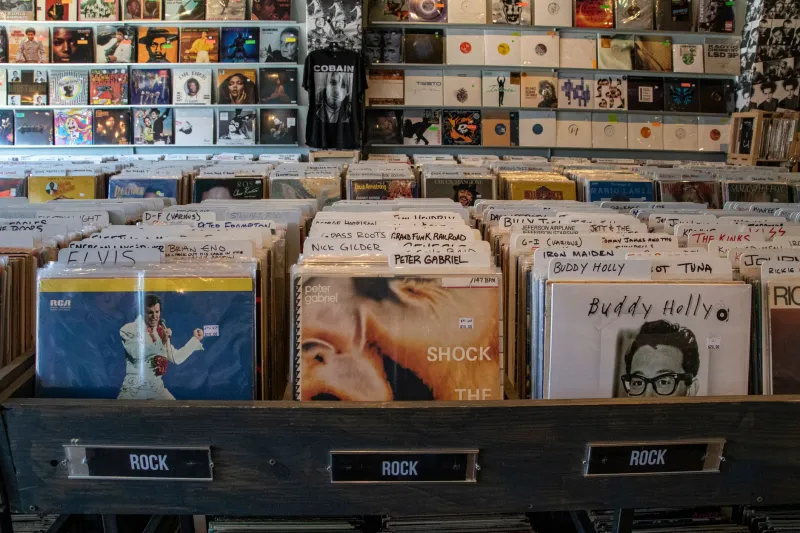
Somewhere in a church basement in Akron, Ohio, a folding table is sagging under the weight of someone's entire life in vinyl. A woman named Deb — who has been doing this for eleven years and will not give her last name because, she says, "the competition is real" — is moving through a milk crate of records with the focused energy of a surgeon. She doesn't flip fast. She reads. Label color. Pressing plant stamp. The faint matrix number scratched into the dead wax by some anonymous factory worker in 1967. In about forty-five minutes, she will walk away with a regional gospel pressing from a small Cincinnati label that has never appeared on Discogs, and she will feel something she describes, without a trace of irony, as spiritual.
This is the crate gospel. And it has more followers than you'd expect.
The Dig Is the Point
Record digging culture has existed as long as record stores have had bargain bins, but the estate sale circuit represents something different — messier, more chaotic, and considerably more rewarding for those willing to put in the work. Unlike a curated record shop, an estate sale is pure archaeology. You're not buying from someone who knows what they have. You're excavating a life.
The records at an estate sale are the ones that never got sold, never got donated to Goodwill in a moment of clarity, never got handed down to a kid who cared. They survived because someone loved them enough to keep them, or forgot they existed, or both. That tension — between the deeply personal and the completely overlooked — is exactly what draws diggers to the format.
"Streaming gave everyone access to everything," says Marcus, a Chicago-based digger who runs a micro-label out of his apartment and sources a lot of his catalog from estate finds. "Which sounds great until you realize that 'everything' actually means 'everything that got digitized.' There's a massive shadow catalog of American music that nobody scanned. Regional releases. Private pressings. Vanity records. Local bands who pressed 300 copies and sold them out of a van. That stuff doesn't exist online. It only exists in boxes."
The Taxonomy of the Find
Diggers have their own internal hierarchy of discoveries, and it's more nuanced than outsiders might expect. At the bottom is what the community calls "good junk" — mainstream releases in decent condition that can be flipped for a few bucks on eBay or at a local record fair. Above that are "sleepers," records that look unremarkable but turn out to be first pressings or alternate mixes. Then come the regional oddities: local country acts, regional soul compilations, church choirs who self-released an album in 1974 and distributed it exclusively through their congregation.
At the top of the pyramid — the holy grail tier — are the private press records. These are albums funded entirely out of pocket, usually in tiny runs, by artists who had no label support and no distribution network. They're the most sonically unpredictable finds in the crate. Some are unlistenable. Some are genuinely transcendent. The digger community has developed a near-religious reverence for them, and the prices on rare private press records have climbed dramatically over the past decade as the broader culture has caught up.
Deb pulls out a sleeve from the crate: a hand-typed label on cardstock, a photo that looks like it was taken in a backyard. "This is what you're looking for," she says, not to me specifically, just sort of to the universe. "This is the one that doesn't exist anywhere else."
The Catalog Obsession
What separates serious diggers from casual thrifters is the documentation. The community has developed elaborate systems for cataloging finds — spreadsheets cross-referenced with Discogs, hand-written ledgers, even custom databases built by people with programming backgrounds who got tired of existing tools. Part of this is practical: if you're flipping records, you need to know what you have. But part of it is something more compulsive, closer to archival instinct than commerce.
Several diggers interviewed for this piece described a genuine anxiety about records disappearing — going back into the void after a brief window of visibility at an estate sale, purchased by someone who doesn't know what they have, played once, and stored in conditions that will destroy them within a decade. The catalog is, in part, a hedge against that anxiety. At least if someone documents a pressing, some record of its existence survives even if the physical object doesn't.
There are online communities — subreddits, Discord servers, regional Facebook groups — where diggers share finds, argue about matrix stamps, and occasionally collaborate on identifying mystery pressings. The vibe is somewhere between academic seminar and competitive sport, with occasional bursts of genuine communal excitement when someone surfaces something that nobody in the group has ever seen before.
The Economics of the Crate
Let's be honest about the money, because the digger community sometimes gets coy about it. There is real economic activity happening in these church basements and garage sales. A private press folk record that costs a dollar at an estate sale can sell for several hundred on Discogs. Regional soul 45s that nobody wanted in 1972 are now serious collector items. The arbitrage opportunity is real, and it draws a certain type of participant who is less interested in the music than in the margin.
Most serious diggers have complicated feelings about this. They understand the economics — many of them participate in them — but there's a persistent tension between the archival impulse and the market impulse. When a rare pressing gets slabbed and listed for $400, it's simultaneously being preserved and being removed from circulation, locked behind a price point that most music fans can't access.
"The ideal outcome is that the record gets heard," says Marcus. "The worst outcome is that it becomes a commodity that nobody plays. But you can't always control that."
Why Physical Media Diggers Refuse to Quit
In an era when any song ever commercially released is theoretically a search bar away, the persistence of crate digging culture might look like nostalgia cosplay. It isn't. Or rather, it isn't only that. The diggers who take this seriously are chasing something that streaming genuinely cannot provide: discovery as an embodied, physical, unrepeatable experience.
The algorithm can surface music you didn't know you wanted based on your listening history. What it cannot do is put an unmarked record in your hands and make you decide whether to spend a dollar on a complete unknown. It cannot replicate the physical act of dropping a needle on something that has no reviews, no metadata, no Spotify play count. The surprise is total. The context is entirely your own.
That's the crate gospel, distilled: not just what you find, but the act of finding it. The record exists in the void until you pull it out. And for a few seconds, before you know what it is or what it's worth, it belongs entirely to you.