The Rot Keepers: Inside the Obsessive World of Abandoned Amusement Park Preservation
There's a particular kind of grief that hits you when you find an old photo of a roller coaster that no longer exists. The steel is gone. The land's probably a strip mall now. But the image remains — some kid's arm raised mid-drop, cotton candy blur in the background, a world that felt permanent and wasn't. That grief is the fuel driving a quietly obsessive subculture of people who refuse to let America's abandoned amusement parks disappear without a fight.
They're not a formal organization. There's no membership card, no annual convention (though some of them probably wish there were). What exists instead is a sprawling, decentralized community of urban explorers, amateur historians, 3D modelers, and hands-dirty restoration enthusiasts who've made it their collective mission to document, digitize, and sometimes physically salvage the crumbling bones of the entertainment spaces that shaped American leisure culture — before those bones turn to dust entirely.
What Gets Left Behind
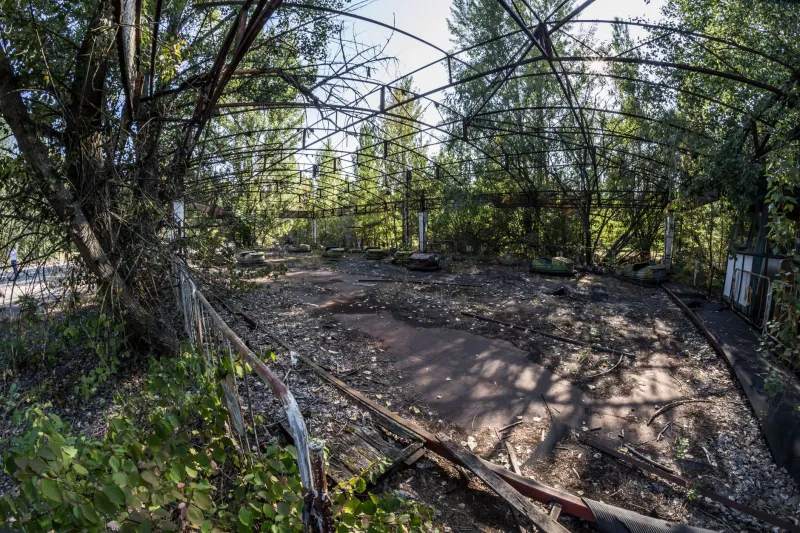
Abandoned amusement parks are a specific kind of haunted. Unlike a derelict factory or an empty hospital, these places were designed to produce joy. The architecture of fun — the bright colors, the whimsical signage, the deliberately disorienting layouts meant to maximize wonder — reads completely differently once nature starts reclaiming it. Vines through a ticket booth. A carousel horse face-down in three inches of standing water. A funhouse mirror still warping your reflection, just for no one.
The United States has more of these sites than most people realize. Chippewa Lake Park in Ohio sat untouched for decades after closing in 1978, its wooden roller coaster slowly collapsing into the tree line. Joyland in Wichita shuttered in 2006 and spent years deteriorating before partial demolition. Lake Shawnee Amusement Park in West Virginia — famously built on a site with a genuinely dark history — became a pilgrimage destination for the morbidly curious long before anyone thought to document it seriously. These aren't anomalies. They're chapters in a story about what happens when the American entertainment economy moves on and leaves its architecture to rot.
The Documentarians
For the photographers and urban explorers in this community, the work starts with access — which is always complicated. Some sites are technically open to the public, either because preservation groups have secured agreements or because the land simply isn't being actively monitored. Others require a more creative interpretation of trespassing laws, which is a conversation this community has loudly and continuously among itself. The ethical lines are genuinely debated: Is it worse to sneak onto private property to photograph a collapsing carousel, or to let that carousel vanish undocumented?
Most of the serious documentarians land somewhere pragmatic. They photograph everything, disturb nothing, and share their work through dense online archives, dedicated subreddits, and personal websites that feel like digital time capsules. The photography itself tends toward the reverent — wide angles that capture scale, macro shots of peeling paint and rusted gears, the occasional portrait of a mascot statue still standing watch over an empty midway. It's less about the thrill of trespassing and more about the act of witnessing.
Some go further. Digital reconstruction has become a major thread in this community, with enthusiasts using old photographs, park maps, home videos, and architectural records to build 3D models of parks that no longer exist in any physical form. These reconstructions range from rough approximations to painstakingly detailed environments that you can actually walk through in VR. Watching someone navigate a photorealistic digital version of Geauga Lake's defunct Americana section — every ride in place, every sign readable — is a genuinely strange experience. It feels less like a video game and more like a séance.
Small-Scale Resurrection
Then there are the ones who want to touch something real.
A subset of this community focuses on physical preservation and small-scale restoration — rescuing artifacts from sites before demolition crews arrive, or working directly with property owners to stabilize structures that might otherwise collapse entirely. Vintage ride cars get pulled from overgrowth and restored in garages. Signage gets carefully removed, stripped of rust, repainted using original color-matched formulas. Animatronic figures from defunct dark rides — deeply unsettling even in perfect condition — find their way into private collections where they're repaired and occasionally displayed at niche events.
This work exists in a complicated legal and ethical space, and the community knows it. Salvage without permission is theft, full stop, and most serious preservationists are emphatic about that. The legitimate path usually involves building relationships with property owners, many of whom are either indifferent to what's decaying on their land or actively relieved to have someone take it off their hands. Local historical societies sometimes get involved. Occasionally a municipality will partner with preservation enthusiasts to stabilize a landmark before it becomes a liability.
The results are rarely glamorous. A restored carousel horse isn't going back on a working carousel. A rescued neon sign from a roadside miniature golf course isn't going back above the windmill hole. But the people doing this work aren't under any illusions about what they're saving — they're building a record, assembling the evidence that these places existed and mattered to real people.
Why It Matters
The easy frame for this community is nostalgia, and nostalgia is definitely in the mix. A lot of these preservationists grew up visiting the parks they're now documenting in their decline. There's personal history embedded in the rust. But reducing this to mere sentimentality misses something important about what's actually being preserved.
Amusement parks, roadside attractions, and regional theme parks were significant cultural infrastructure. They were where working-class families spent their leisure time. They were regionally specific in ways that chain entertainment never is — a park in rural Ohio had a different character than one in coastal California, and that regional specificity is exactly what gets flattened when corporate entertainment homogenizes the landscape. What this community is archiving isn't just old rides. It's evidence of how specific communities chose to play, to celebrate, to exist together in public space.
The void that opens up when these places close is real, and it doesn't always get filled. Sometimes the land sits empty for years. Sometimes it becomes a big-box retail corridor. Rarely does anything replace the specific social function the park served. Documenting the physical remains is, in part, a way of insisting that the loss was real and worth grieving.
Finding the Fringe
If you want to find this community, you already know where to look: the darker corners of Reddit, Discord servers with names that gesture at decay and memory, long-running personal blogs that read like field journals. The photography work shows up on Flickr archives that haven't been updated since 2019 next to Instagram accounts posting new material every week. The digital reconstruction projects live on itch.io and in YouTube deep-dives that somehow pull six-figure view counts from an audience nobody knew existed.
It's a community that formed in the space between what got remembered and what got forgotten, and it's doing the unglamorous, obsessive, completely necessary work of making sure the gap between those two things stays as narrow as possible.
The parks are still out there. Somewhere in the Midwest right now, a wooden coaster is losing another plank to the weather. Somewhere in the South, a fiberglass dinosaur from a roadside attraction is sinking slowly into the earth. And somewhere, someone is already planning the trip to document it before it's gone — camera charged, boots ready, grief and reverence packed in equal measure.