Somebody’s Aunt, Invented: The Living-Room Séances for Thrift-Store Strangers
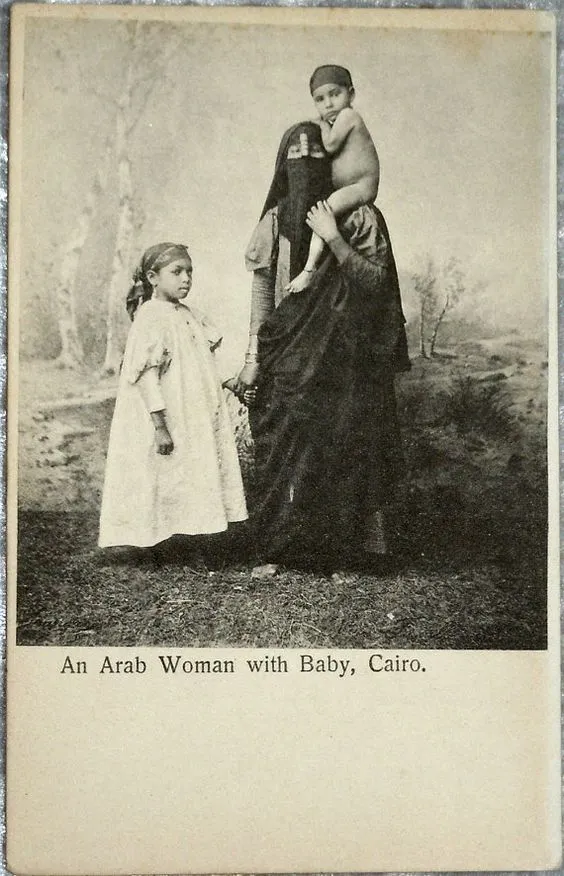
Photo: Unknown authorUnknown author, Public domain, via Wikimedia Commons
The woman on the index card
The living room is in Portland, Oregon, and the carpet is the color of a faded mall. Twenty people sit on folding chairs and floor cushions. A zine swap is happening in the kitchen. In the center of the room, a woman named June holds a thrift-store photograph of an unknown woman in a yellow cardigan, circa 1974, standing beside a station wagon.
June reads from an index card. The woman's name is Margaret. She is forty-two. She works at a dental office and keeps a secret stash of butterscotch in her glove compartment. She is having an affair with a neighbor named Dale, or she is not, depending on which version June is doing tonight. In this version, Margaret is just tired. In this version, Margaret is about to drive to the coast and not tell anyone.
The room is quiet. Nobody laughs at the photo. Nobody says it looks like a random snapshot. For five minutes, Margaret is somebody's aunt. Then June flips the card, and Margaret is gone.
This is a found-photo séance, though nobody in the room believes in ghosts. The practice has been growing quietly for years in zine scenes, art schools, and online groups devoted to 'orphan photographs.' Collectors buy anonymous family pictures from estate sales, flea markets, and thrift stores. Some simply archive them. Others write elaborate fictional biographies and perform them at living-room gatherings, zine launches, and small gallery shows. The performances are not claims about the dead. They are invitations to look closer.
The ethics of making someone up
The obvious question is consent. The people in these photos cannot approve a story. Some are probably still alive. Some are definitely dead. The collector does not know their real names, and often does not want to know. The practice sits in a gray zone between preservation and invention, and the people who do it are more aware of that than you might expect.
Most of the séance hosts I spoke with have rules. No real names if they can be traced. No stories that hinge on violence or humiliation. No mocking the clothes, the haircuts, the poses. The goal is not to roast a stranger. The goal is to imagine a life with dignity. Some hosts label their performances as fiction. Some write the invented biography on the back of a copy, never the original. Some try to reunite photos with families when the provenance is clear, though that is rare.
'It is not theft if you are careful,' says a collector who goes by Rook and runs a monthly séance in a laundromat back room. 'But it is not innocent either. You are borrowing a face. You have to be a good guest.'
That language comes up a lot: guest, steward, custodian. The collectors talk about these photos as objects that have been abandoned, not just by families but by history. Formal archives tend to preserve the powerful, the famous, the documented. The ordinary snapshot of a working-class family, a queer couple in a backyard, a woman in a yellow cardigan beside a station wagon, often falls through the cracks. The séance is a way of refusing that disappearance, even if the refusal is fictional.
A reparative kind of make-believe
At the Portland gathering, the stories are not all sad. One performer invents a retired postal worker who becomes a competitive ballroom dancer. Another imagines a teenage girl in a 1980s mall photo as the founder of a short-lived but influential all-girl punk band. The audience laughs. The photos are passed around. People hold them like they are warm.
The progressive case for this practice is not that it is perfect. It is that it treats ordinary lives as worth narrating. The séance insists that a stranger in a thrift-store frame is not just clutter. They are a person with a favorite flavor of gum, a bad knee, a secret. The performance does not recover the truth. It recovers attention.
There is also a craft to it. The best bios are specific but not overstuffed. They leave room for the photo to push back. A good performer will notice the way the subject's hand hovers near a pocket, the way the station wagon door is open, the way the light suggests late afternoon. The story grows from the image, not on top of it. When it works, the audience stops seeing a random snapshot and starts seeing a scene.
The photo goes back in the box
After the séance, June puts the yellow-cardigan photo in an acid-free sleeve and returns it to a shoebox labeled 'unclaimed.' She does not know who the woman was. She will probably never know. The story she performed will not be repeated as fact. It will be repeated as a story, which is a different thing.
'People think we are making fun of these photos,' she says. 'We are not. We are sitting with them. There is a difference between inventing a life and erasing one.'
The zine swap continues in the kitchen. Someone trades a photocopied booklet of invented biographies for a booklet of abandoned vacation slides. The night ends with coffee and a shared sense that the dead, or at least the anonymous, have been kept company for a while. It is not a séance. It is a room full of people agreeing to care about strangers. That might be stranger, and better, than any ghost.