Stitch the Dead Back: How a New Generation of Taxidermists Is Making Victorian Preservation Weird Again
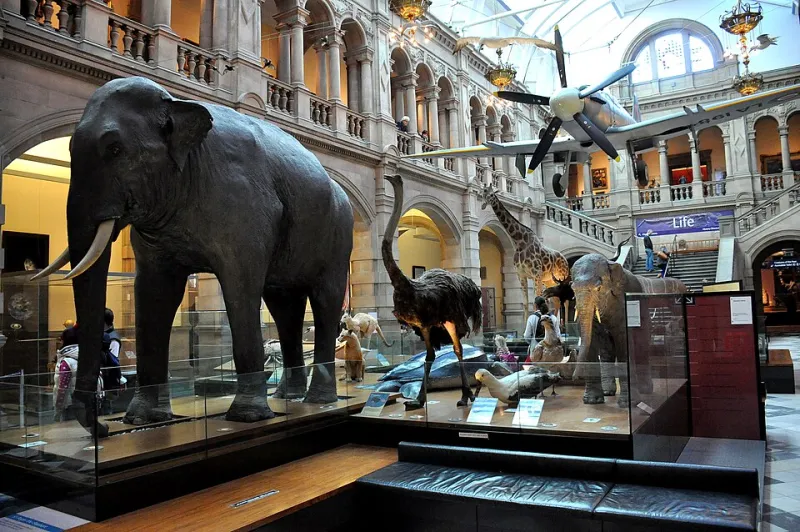
Photo: Osama Shukir Muhammed Amin FRCP(Glasg), CC BY-SA 4.0, via Wikimedia Commons
There's a specific kind of silence inside a natural history museum that feels borrowed from somewhere older than the building itself. It's the silence of things that used to move. Walk past enough glass cases and you start to feel it — this strange, suspended energy, like the room is holding its breath. For most visitors, it's background atmosphere. For a growing community of obsessive practitioners scattered across the US, it's a calling.
Contemporary taxidermy is having a moment. Not the mainstream kind with celebrity hunters and reality TV competitions, but something quieter and considerably weirder — an underground revival rooted in Victorian technique, ethical sourcing, and a genuine artistic ambition that's pulling the craft out of the garage and into the gallery.
What the Victorians Actually Got Right
The 19th century was, by almost any measure, a deeply strange time to be alive. It was also, weirdly, a golden age for the preservation arts. Victorian naturalists weren't just stuffing animals for sport trophies — they were building elaborate dioramas, practicing rogue-mount techniques that bordered on sculpture, and developing preservation methods that modern practitioners are only now rediscovering.
Techniques like arsenic preservation (genuinely dangerous, genuinely effective), papier-mâché form-building, and the use of glass eyes hand-blown to match living specimens — these were painstaking, obsessive processes that treated the preserved animal as something close to sacred. Somewhere in the 20th century, industrial shortcuts replaced craft knowledge, and taxidermy drifted toward kitsch.
The revival community wants that craft knowledge back. Forums, YouTube deep-dives, and private Discord servers have become informal archives where practitioners trade documentation of forgotten methods, argue about the ethics of reproduction versus restoration, and post work-in-progress photos that look like they belong in a contemporary art exhibition.
The Gallery Scene Nobody's Talking About
If you follow the right accounts on Instagram, you've probably already seen this work without knowing what you were looking at. Artists like Minnesota-based Sarina Brewer — often cited as a founding figure of the rogue taxidermy movement — have been exhibiting preserved and altered specimens in gallery contexts for over two decades. But the scene has expanded dramatically in the last five years, with younger practitioners showing in alternative spaces from Brooklyn to Portland.
What separates this work from traditional taxidermy isn't just aesthetics. It's intent. Where conventional mounts aim for naturalistic invisibility — the goal being to make the animal look alive — contemporary gallery taxidermy often leans into the artifice. Seams are left visible. Forms are posed in ways no living animal would hold. Some practitioners incorporate mixed media, embedding specimens in resin, combining skeletal and fleshed elements, or building entirely fictional creatures from ethically sourced parts.
It sounds macabre. In person, a lot of it is genuinely beautiful.
The Ethics Conversation Is Actually Interesting
Here's where it gets complicated, and where the community diverges in ways that generate real heat.
Sourcing is everything in ethical taxidermy, and the standards vary wildly. At one end of the spectrum, you have practitioners who work exclusively with roadkill, animals found dead of natural causes, or specimens donated by wildlife rehabilitators. At the other end are people who source from fur farms or hunting operations, which puts them in direct conflict with the more explicitly progressive wing of the community.
The debate isn't as simple as animal lovers versus hunters. Many serious taxidermists argue that working with a specimen that's already dead is one of the most respectful things you can do — that preservation is a form of honoring the animal's physical existence rather than letting it decompose into nothing. Others push back hard on that framing, arguing that ethical intent doesn't sanitize a supply chain with real harm built into it.
What's notable is that these arguments are happening at all. Traditional taxidermy culture didn't spend a lot of time on sourcing ethics. The fact that the revival community is wrestling with it publicly — in forums, in artist statements, in interviews — suggests something genuinely different is going on here.
Learning in the Void
One of the most interesting things about this revival is how decentralized it is. There's no accredited taxidermy school you can attend to learn Victorian wet-specimen preservation or antique form restoration. Knowledge gets passed through informal apprenticeships, online tutorials, and the kind of obsessive self-teaching that characterizes most niche underground communities.
The Breakthrough Taxidermy Guild, the World Taxidermy Championships, and various state-level competitions exist — but many of the artists pushing the craft in new directions are deliberately outside those structures. They're not competing for ribbons. They're building something that looks more like an art scene than a hobby community, complete with the social dynamics and gatekeeping debates that come with that.
Reddit's r/Taxidermy community has become one of the more accessible entry points for newcomers, mixing beginners asking basic questions with experienced practitioners sharing archival research and technique breakdowns. The tone is notably welcoming compared to a lot of niche hobby spaces, which might explain part of the growth.
Why Now?
It's worth asking why Victorian taxidermy specifically is finding its audience in 2024. Part of it is probably the broader cultural appetite for analog craft — the same energy that drives people toward letterpress printing, film photography, and hand-bookbinding. There's a genuine hunger for making things slowly and physically in a world that keeps accelerating.
But taxidermy carries something extra. It sits at the intersection of death, beauty, science, and the uncanny in a way that feels genuinely strange rather than nostalgically comfortable. In a culture that's gotten increasingly good at sanitizing death — hiding it in hospitals, outsourcing it to professionals, filtering it out of public view — there's something almost radical about an art form that puts it right in front of you under glass.
The void stares back, and these practitioners are staring right back into it with a scalpel and a set of glass eyes. Honestly? Respect.