The Forbidden Shelf: Inside the Secret Networks Keeping Banned Books Breathing
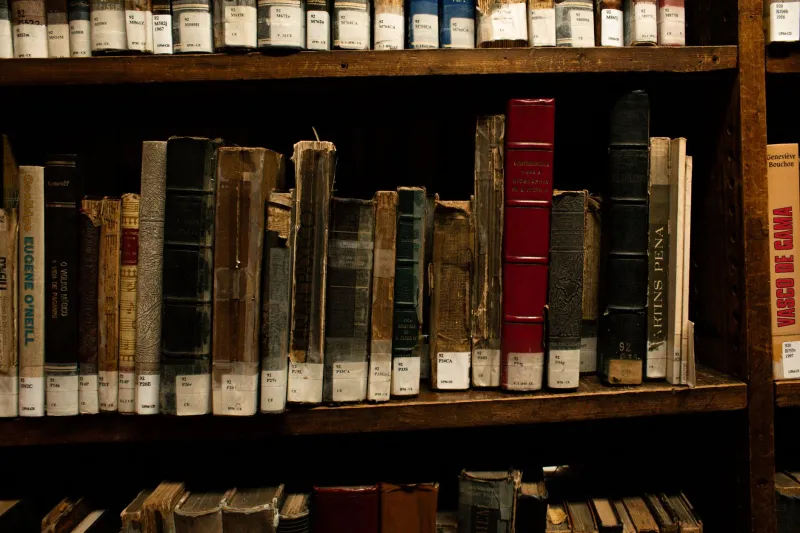
There's a particular smell to a book that almost didn't survive. Mildew and aged paper, yes, but something else underneath — the faint chemical signature of stress, of a physical object that has been hidden, moved, buried, and resurrected more times than any single human being could manage in a lifetime. If you know what you're looking for, it's the smell of resistance.
Across the United States, a loose and largely anonymous network of collectors, librarians, archivists, and committed weirdos are doing something that sounds almost quaint until you understand the stakes: they're preserving books that someone powerful decided the rest of us shouldn't read. Not just in the passive, dusty-warehouse sense. Actively. Obsessively. With the kind of devotion typically reserved for religion or unrequited love.
They don't have a formal name. Some call themselves archivists. Others just say they collect. But within the community, a few refer to themselves — half-jokingly, half-not — as the Dust Prophets. Keepers of the word that wasn't supposed to make it.
What Gets Preserved, and Why
The obvious entry points are the classics of censorship history: Lady Chatterley's Lover, Ulysses, Tropic of Cancer. But the Dust Prophets aren't particularly interested in books that eventually found mainstream redemption. Their focus tends to run deeper and stranger.
Think political pamphlets from early 20th-century labor movements that were literally confiscated and burned by federal agents during the Red Scare. Religious texts from minority faiths that were suppressed by dominant denominations with the muscle to make suppression stick. Self-published manifestos from civil rights-era organizers that never made it into any official archive because the institutions doing the archiving weren't exactly sympathetic to the cause. Zines from the AIDS crisis containing harm reduction information that the government actively worked to block. Medical texts translated into Spanish for immigrant communities that were seized at the border.
The throughline isn't genre or ideology — it's the presence of an entity with power deciding this particular document was too dangerous to exist freely.
"Censorship is never really about morality," one archivist — who asked to be identified only as working somewhere in the mid-Atlantic region — told us over an encrypted messaging app. "It's always about control. When you look at what actually gets banned or burned or quietly disappeared, it's almost always information that would help people organize, resist, or understand something the people in charge don't want understood."
The Legal Gray Zone Is More Like a Gray Fog
Here's where it gets genuinely complicated. Most of what the Dust Prophets do is entirely legal. Owning a banned book isn't a crime in the United States — the First Amendment has teeth, even if they've been getting filed down lately. Digitizing a fragile text for preservation purposes occupies murkier territory under copyright law, particularly when the original publisher no longer exists or when the work was suppressed before it could establish a clear ownership record.
Some archivists work openly within institutional frameworks — university special collections, independent libraries, even a handful of public library systems with unusually committed staff. Others operate entirely outside any institutional umbrella, maintaining personal collections that function as shadow libraries, accessible by referral and trust rather than card catalog.
The more sensitive material — texts that touch on active legal cases, documents that governments in other countries have classified, anything that could plausibly be described as providing material support to a designated organization — requires more careful handling. A few archivists we spoke with described using physical dead drops, air-gapped digitization computers, and distribution methods borrowed from the pre-internet samizdat tradition of Soviet-era underground publishing.
"We're not doing anything wrong," said one collector based in the Pacific Northwest who maintains what she describes as a reading room for "documents that need a second chance." "But we've watched enough history to know that 'not doing anything wrong' doesn't always protect you. So we're careful."
The Digitization Problem
Preservation is never just about keeping the physical object intact. Paper degrades. Ink fades. A book that survives censorship can still be killed by humidity, silverfish, or a landlord who decides to throw everything in a storage unit without climate control.
Digitization is the obvious answer, but it comes with its own labyrinth of complications. Scanning a fragile text without damaging it requires equipment and expertise that most people don't have. Creating digital files that will actually remain readable in fifty years — rather than being locked in proprietary formats that future software won't support — requires a level of technical foresight that most archivists are still working out.
Then there's the distribution question. A digital file that lives on a single hard drive in someone's basement isn't preserved — it's just moved. The Dust Prophets who think seriously about longevity tend to work in redundancy: multiple physical copies in geographically distributed locations, encrypted uploads to decentralized storage networks, and in some cases, connections to international mirror archives in jurisdictions with stronger protections for this kind of work.
The Internet Archive gets mentioned constantly in these conversations, usually with a mix of admiration and anxiety. "It's incredible and it's fragile," one archivist said. "One successful lawsuit and a significant chunk of digital preservation disappears. You can't put all your forbidden texts in one basket."
Why 'Dangerous Ideas' Is the Point
There's a certain kind of person who hears "preserving banned books" and imagines something neutral and academic — the careful, dispassionate work of institutional memory. The Dust Prophets are mostly not that.
For many of them, the work is explicitly political. The books they're preserving weren't censored by accident. They were suppressed because they contained ideas that challenged something — a government, a corporation, a church, a social order that benefited from those ideas staying buried. Keeping those ideas alive isn't a neutral act of historical record-keeping. It's a choice to say: this matters, this belongs to the people who need it, and no institution gets to decide otherwise.
"Every book that gets banned is a map," said the mid-Atlantic archivist. "It shows you exactly what whoever banned it was afraid of. That's the most interesting thing about them. The fear is right there in the act of suppression."
In an era where school board meetings are being weaponized to pull books from classroom shelves, where state legislatures are passing laws that make librarians nervous about their own jobs, and where the algorithmic curation of information increasingly shapes what ideas people encounter at all, the work of the Dust Prophets feels less like antiquarian obsession and more like infrastructure.
Somebody has to hold the things that power wants dropped. These people decided it was going to be them.
Finding the Shelf
If you're looking for a way in — whether as a reader, a donor, or someone with a collection of your own that needs a safer home — the entry points are deliberately non-obvious. The Little Free Library network has more than a few participants quietly stocking titles that have been challenged in local schools. The Radical Reference collective connects researchers with librarians who specialize in exactly this kind of material. Zine fests and independent book fairs often have tables staffed by people who know people.
And if you find yourself standing in front of a shelf of books that someone went to serious effort to make sure you'd never see — well. That's probably a shelf worth reading.