Press Play on Purpose: The Underground Artists Ditching Streams for Tape and Never Looking Back
Somewhere in a cramped bedroom in Albuquerque, a musician named Delia Voss is running off her forty-third batch of dubbed cassettes on a consumer deck she found at a Goodwill for eleven dollars. She hand-stamps each shell, cuts j-card inserts on a secondhand inkjet, and sells the finished product exclusively through a Bandcamp page that explicitly states: no digital files, no streaming, no exceptions. She sold out in six hours.
"Spotify pays fractions of pennies and then tells you to promote your own music to their algorithm," she says, not looking up from the deck. "I'd rather sell forty tapes to forty people who actually chose to be there."
This is the tape underground in 2025 — scrappy, intentional, and growing faster than anyone who works in a glass-walled tech office would care to admit.
The Algorithm Has an Opposite, and It Hisses
The streaming era promised democratization. What it delivered, for most independent artists, was a content treadmill with no exit ramp. Release constantly or disappear. Chase playlist placement or accept irrelevance. The math is brutal: even a million streams on a major platform might net an artist less than four thousand dollars. For underground musicians operating in genres that don't register on Spotify's radar — think harsh noise, dungeon synth, lo-fi black metal, experimental ambient — those numbers are a fantasy anyway.
Cassettes don't pretend to offer scale. That's the point.
When you press a run of one hundred tapes, you're not trying to reach everyone. You're trying to reach your people — a specific, self-selecting audience who cares enough to seek out a physical object, pay for it, and actually listen to it in a way that streaming's shuffle culture rarely demands. The tape becomes a contract between artist and listener. You bought this. You committed. Now sit with it.
For many artists in the underground, that intimacy is worth more than any playlist bump.
Who's Actually Making These Things
The cassette manufacturing ecosystem is small but surprisingly robust, kept alive by a handful of dedicated duplicators who serve this exact niche. National Audio Company out of Springfield, Missouri — one of the last large-scale tape manufacturers in the US — has reported steady increases in orders from independent musicians over the past several years. But below that industrial level, a network of cottage duplicators operates out of garages and spare rooms, running banks of consumer decks to fulfill micro-runs of twenty-five to two hundred tapes.
Labels like Hausu Mountain in Chicago, Constellation Tatsu in San Francisco, and a dozen smaller operations scattered across the country have built entire catalog identities around the format. They're not releasing tapes because vinyl is too expensive (though it is). They're releasing tapes because the format means something to the communities they serve.
The economics are tight but workable. A run of one hundred dubbed tapes with printed j-cards might cost an artist between two and four hundred dollars to produce. Sell them at eight to twelve dollars each and you've covered costs and put money in your pocket — without surrendering a percentage to a distributor, a label, or a platform taking its algorithmic cut.
The Tape as Object, Not Just Medium
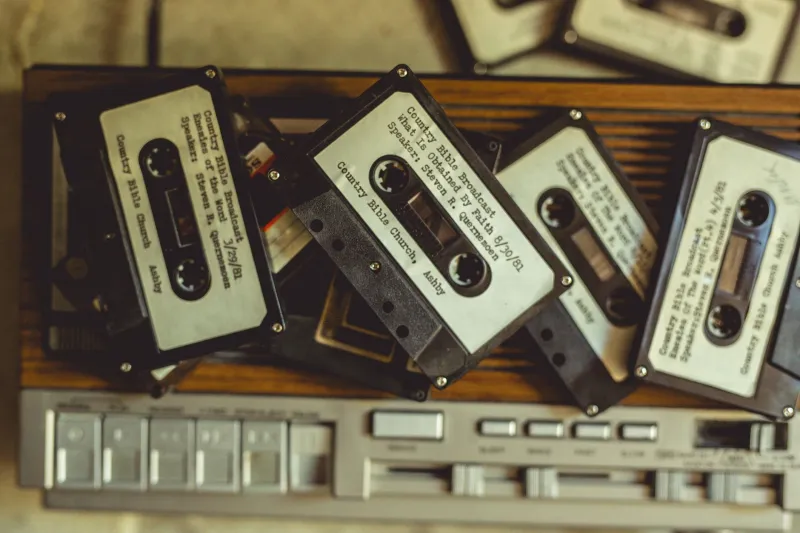
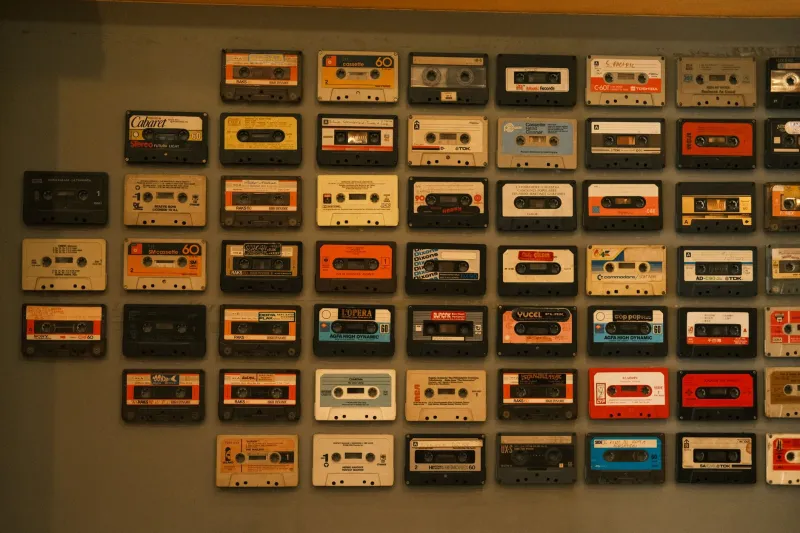
What separates this movement from pure nostalgia is the degree to which artists treat the cassette as a designed artifact rather than a delivery mechanism. The j-card — that folded insert tucked inside the plastic case — has become a canvas. Hand-stamped shells, spray-painted cases, inserts printed on unusual paper stock, hand-numbered editions, mystery tapes with no track listing. The physical object carries information that a streaming thumbnail never could.
Marco Feld, who releases drone music under the name Lull Meridian out of Portland, Oregon, describes his tape releases as "small sculptures that also make sound." His last run included hand-poured resin inserts and sold out before he'd finished announcing it.
"People keep them on shelves," he says. "They display them. I've had people tell me they haven't even listened to some of my tapes yet but they look at them every day. That's a relationship with music that Spotify literally cannot create."
This is where the tape underground diverges sharply from the vinyl revival, which has largely been absorbed into mainstream commerce. A colored vinyl pressing from a major label is still a major label product. A hand-dubbed tape from a bedroom artist is something else entirely — closer to a zine or a hand-sewn patch than to a traditional music release.
The Playback Problem (And Why Nobody Cares)
Critics of the format love to point out the obvious: most people don't own tape decks anymore. It's a fair observation that the tape underground greets with a collective shrug. Walkman units sell steadily on eBay and at thrift stores. Boomboxes never fully disappeared. And for the genuinely committed, a decent consumer deck costs less than a month of a cable subscription.
More importantly, the playback barrier functions as a feature, not a bug. The slight friction of needing a deck to listen filters the audience toward people who are genuinely invested. You're not going to casually stumble onto a tape release the way you might stumble onto a Spotify recommendation. You have to want it.
"I don't want passive listeners," says Voss, finally looking up from her dubbing deck. "Passive listeners don't come to shows, don't tell their friends, don't build anything. The people buying tapes are active. They're participants."
A Scene That Doesn't Need Your Attention
What's quietly radical about the tape underground is its complete indifference to mainstream validation. There's no Pitchfork review that will make or break a run of fifty cassettes. There's no algorithm to game, no playlist editor to court, no label A&R to impress. The ecosystem operates on word of mouth, small social media communities, distro lists, and the kind of peer-to-peer recommendation networks that the internet was theoretically built for before engagement metrics colonized everything.
In that sense, the tape underground is less a music scene and more a philosophy of distribution — a working proof that you can build a sustainable creative practice without surrendering to the attention economy's terms.
The hiss at the start of a tape, that brief wash of analog noise before the music kicks in, has always felt like a threshold. A moment of transition between the world outside and whatever the artist built on the other side. In an era of instant, frictionless, algorithmically-sorted content delivery, that hiss is starting to sound a lot like freedom.
Press play when you're ready. The tape will wait.